
How to Start a Home Food Business in India | Momskart
⚡ Key Takeaways (TL;DR)
- You can launch from your residential kitchen legally under FSSAI Basic Registration (Form A) without commercial restaurant licenses.
- Start with a tightly focused signature menu of 3 to 5 shelf-stable items such as pickles, roasted snacks, or traditional sweets.
- Momskart charges zero listing fees and a flat 5% platform fee (+18% GST on that fee) with doorstep courier pickup across 15,000+ pincodes.
- Always calculate realistic product pricing covering raw materials, food-grade packaging, and your labor time before setting retail prices.
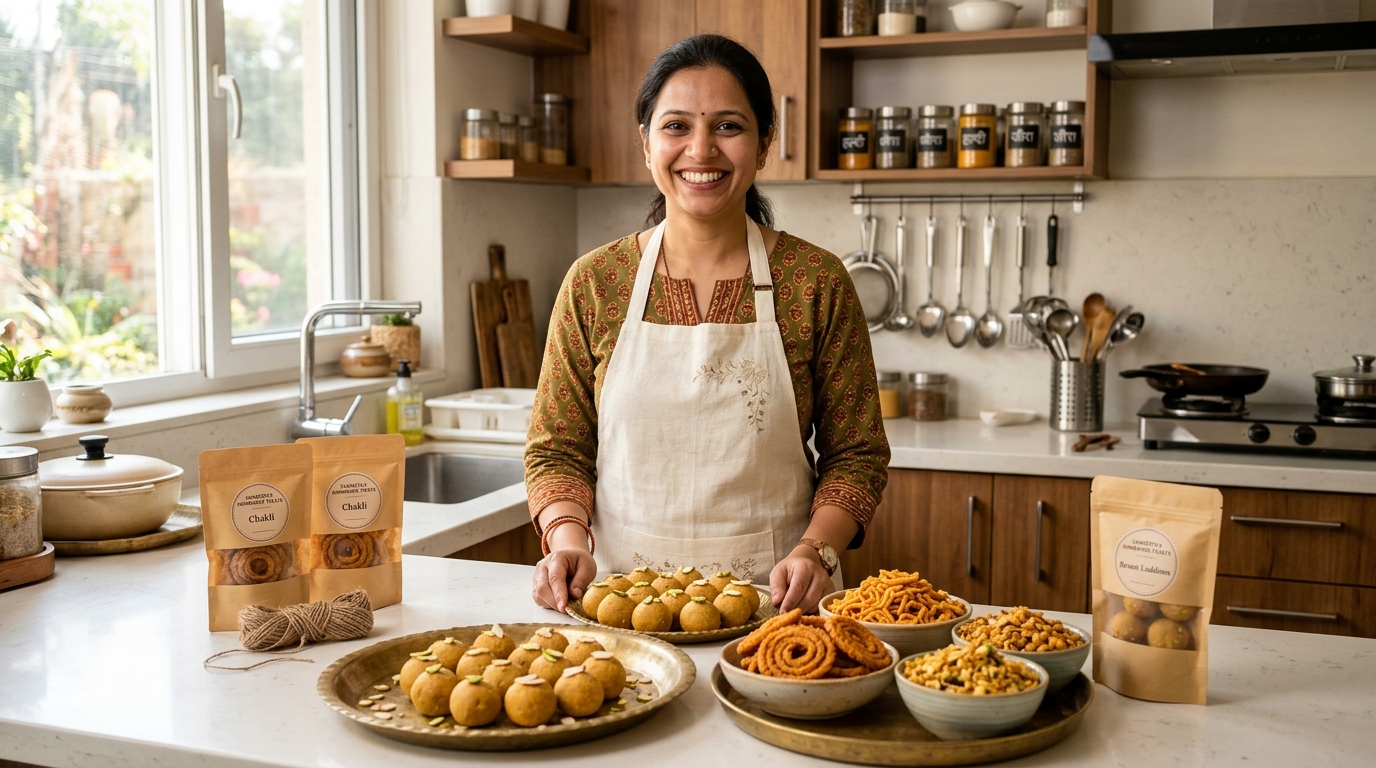
Starting a home food business is one of the most accessible and sustainable ways for Indian women to achieve financial independence from their own kitchens. Whether you prepare traditional regional pickles, roasted namkeen, wholesome laddus, or dry spice blends, nationwide buyers value authentic homemade quality over factory-made mass products. In this comprehensive guide, we walk you through legal requirements, kitchen hygiene standards, packaging methods, pricing math, and how to start selling online without paying commercial rent.
1. Select Your Signature Niche and Shelf-Stable Menu
The most frequent mistake beginner home chefs make is trying to cook twenty different dishes across diverse cuisines. An extensive menu complicates raw ingredient sourcing, creates inventory wastage, and complicates parcel packaging for transit.
Instead, identify 3 to 5 signature regional items that you prepare exceptionally well and that have a natural ambient shelf life of at least 30 to 90 days. Top performing categories on Momskart include:
- • Regional Pickles & Chutneys: Mango, stuffed red chili, garlic, and amla pickles preserved in natural mustard or sesame oil.
- • Dry Namkeen & Savories: Mathri, roasted makhanas, poha chivda, chakli, and millet-based diet mixtures.
- • Traditional Desi Ghee Sweets: Besan laddu, gond laddu, pinni, and dry fruit bites that travel securely without melting.
- • Pounded Dry Masalas: Sambar powder, chai masala, garam masala, and regional curry premixes.
2. Understand Legal Compliance: Basic FSSAI Registration
Under the Food Safety and Standards Act of 2006, any individual manufacturing or selling food commercially in India must obtain a registration or license. For small home kitchens and micro-enterprises with annual turnover under ₹12 Lakhs, the Government of India provides a simplified Form A Basic Registration via the FoSCoS portal (foscos.fssai.gov.in).
The official government filing fee is ₹100 per year. You do not need commercial premises or industrial inspections for basic registration. Documents required are simply your passport-size photo, residential address proof, and government ID (Aadhaar or PAN). Check out our complete step-by-step walkthrough in our dedicated FSSAI Registration Guide.
3. Kitchen Hygiene, Batch Testing, and Quality Control
Food safety and hygiene are paramount when sending edible goods to customers in distant cities. Maintain strict hygiene protocols: use separate sanitized cookware for commercial batches, wear hair nets and food-grade gloves during packaging, and keep preparation surfaces clean.
Always conduct a 30-day ambient shelf life test before listing any new recipe. Pack a test sample exactly as you would for shipping, keep it in typical room conditions, and evaluate aroma, texture, and taste over 4 weeks to verify freshness and stability.
4. Transparent Pricing Math: How to Calculate Your Earnings
To run a profitable business, your selling price must account for ingredient costs, packaging materials, platform commissions, and your labor. On Momskart, you enjoy zero listing fees and a flat 5% platform fee (+18% GST on that fee only).
For example, if you sell a ₹400 jar of pickle, the 5% platform fee is ₹20.00 and 18% GST on the fee is ₹3.60. Your net payout before courier is ₹376.40 (94.1% of your product price). Doorstep courier charges are shown upfront in the calculator, ensuring you never face unexpected deductions.
5. Pan-India Doorstep Logistics with Momskart Miles
In traditional local business, home creators were restricted to neighbors within a 3-kilometer radius. With Momskart Miles logistics, verified courier partners arrive directly at your home doorstep across 15,000+ pincodes in 25+ states.
Orders are picked up from your doorstep, tracked in real-time, and delivered safely to customers nationwide. Your earnings are deposited directly into your verified bank account every Wednesday via NEFT or IMPS.
Frequently Asked Questions
Can I operate a home food business from a rented apartment in India?
Yes. You can obtain basic FSSAI registration from a rented residence using your rent agreement, utility bill, and landlord consent as address proof.
How much upfront capital is required to start on Momskart?
Momskart charges zero registration fees and zero listing fees. Your only initial investment is purchasing raw ingredients and standard packaging pouches or jars for your first small batch.
Do I need a GST number to sell homemade food online?
GST requirements depend on what you sell, your turnover, and whether you sell intra-state or inter-state. Some small home food sellers below threshold turnover limits may be exempt from mandatory registration. Please check current GST rules or consult a Chartered Accountant before you start.
How are customer returns handled for food items?
Perishable and hygiene-sensitive edible items are non-returnable once delivered, protecting sellers from frivolous return losses. If courier damage occurs in transit, Momskart support investigates courier claims directly.
Related Practical Guides
Launch Your Homemade Brand on Momskart Today
Zero listing fees, flat 5% platform fee, and doorstep courier pickup across 25+ Indian states.